Hansa Biopharma and SERB Seek Full EU Marketing Authorisation for Idefirix
Swedish biopharmaceutical company Hansa Biopharma and SERB Pharmaceuticals have announced a new regulatory milestone for Idefirix (imlifidase), following the submission of an application to the European Medicines Agency (EMA) seeking conversion of the medicine's existing conditional marketing authorisation into a standard marketing authorisation in the European Union.

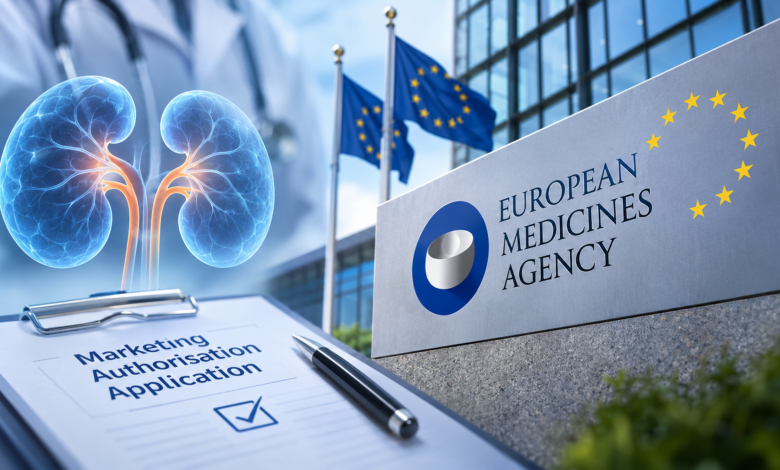
The application, submitted by SERB Pharmaceuticals and announced on 26 November 2026, is supported by clinical evidence gathered through a European post-authorisation efficacy study conducted among highly sensitised adult patients undergoing kidney transplantation.
Idefirix currently holds conditional marketing authorisation in the EU for the desensitisation treatment of highly sensitised adult kidney transplant patients who have a positive crossmatch against an available deceased donor.
The latest submission represents a further stage in the regulatory assessment of the treatment, although a decision on conversion to standard marketing authorisation has yet to be made.
European Clinical Study Provides Supporting Evidence
The regulatory submission draws on findings from the European Post-Authorisation Efficacy and Safety (PAES) study, identified as 20-HMedIdeS-19.
The open-label, confirmatory study evaluated clinical outcomes in highly sensitised patients who underwent HLA-incompatible kidney transplantation following desensitisation with imlifidase.
According to the results reported by Hansa Biopharma and SERB Pharmaceuticals, the study achieved its primary objective, with 90% of patients remaining alive without graft failure one year after transplantation.
The companies also reported a one-year patient survival rate of 98% and a graft survival rate of 92%.
In terms of safety, imlifidase was reported to have been generally well tolerated, with findings consistent with the safety profile observed in previous clinical studies.
The results were presented at the American Society of Nephrology’s ASN Kidney Week meeting in October 2026.
As the investigation was conducted using an open-label design, its findings should be considered within the context of the study methodology and the wider clinical evidence available.
The Challenge of Kidney Transplantation in Highly Sensitised Patients
Highly sensitised patients represent a particularly challenging group within kidney transplantation.
These individuals have developed antibodies against human leucocyte antigens (HLA), which may react with antigens present in a potential donor organ. Such immune responses can complicate donor compatibility assessments and increase the risk of transplant rejection.
Consequently, highly sensitised patients may experience prolonged periods on transplant waiting lists, particularly when suitable donor organs are difficult to identify.
According to the scientific literature referenced in the companies’ announcement, highly sensitised patients account for approximately 10–15% of individuals awaiting transplantation in Europe and the United States.
Imlifidase is an immunoglobulin G (IgG)-cleaving enzyme derived from Streptococcus pyogenes. It acts by breaking down IgG antibodies, including antibodies that may contribute to incompatibility between a transplant recipient and a potential donor.
Under its existing European authorisation, the treatment is intended for a defined patient population whose likelihood of receiving a compatible kidney through available organ allocation systems, including prioritisation programmes, is considered low.
What the Application Means for EU Regulatory Approval
Conditional marketing authorisation is a regulatory mechanism used in the European Union to allow certain medicines to be authorised while additional clinical evidence is being collected.
Such authorisations are subject to specific obligations, which may include further studies designed to confirm a medicine’s clinical benefits and provide additional safety or efficacy information.
Once the required evidence becomes available, the marketing authorisation holder may apply for conversion to a standard marketing authorisation.
The application submitted by SERB Pharmaceuticals will now be assessed through the relevant European regulatory procedures.
Importantly, submission of the application does not constitute approval of a standard marketing authorisation. Any change in the medicine’s authorisation status remains subject to regulatory assessment and the applicable EU decision-making process.
Hansa Biopharma Highlights Clinical Evidence
Commenting on the development, Renée Aguiar-Lucander, Chief Executive Officer of Hansa Biopharma, described the submission as an important milestone in the medicine’s regulatory development.
She indicated that the clinical evidence generated since Idefirix received conditional authorisation in Europe, including the findings from the PAES study, had contributed to the scientific understanding of its use in highly sensitised kidney transplant recipients.
Hansa Biopharma also confirmed that it would continue supporting SERB Pharmaceuticals during the regulatory review process.
Commercial Partnership Established in July 2026
The latest regulatory development follows a licensing agreement between Hansa Biopharma and SERB Pharmaceuticals announced on 1 July 2026.
Under the agreement, Hansa granted SERB exclusive rights to Idefirix in transplantation across the European Union, the United Kingdom, Switzerland, Norway, Liechtenstein, Iceland, and the Middle East and North Africa (MENA) region.
The arrangement forms part of the companies’ broader collaboration concerning the commercial development and regulatory management of the medicine in the territories covered by the agreement.
Hansa Biopharma, headquartered in Lund, Sweden, specialises in immunomodulatory therapies and technologies targeting immunoglobulin G antibodies. Its research activities extend beyond transplantation into other areas involving complex immune disorders.
SERB Pharmaceuticals focuses on pharmaceutical products addressing specialised and often complex medical needs.
Regulatory Decision Remains Pending
The EMA submission marks a further development in the European regulatory history of imlifidase, following the collection of additional clinical data under the existing conditional marketing authorisation.
The forthcoming assessment will examine whether the submitted evidence satisfies the requirements for conversion to a standard marketing authorisation.
For the transplantation community, the process also illustrates the role of post-authorisation clinical research in generating additional evidence for medicines initially approved under conditional regulatory pathways.
The outcome of the European review remains pending, and no change to the medicine’s existing authorisation status has been announced as part of the 26 November submission.
Sources: Hansa Biopharma and SERB Pharmaceuticals, joint corporate announcement, 26 November 2026; European Medicines Agency (EMA), Idefirix European Public Assessment Report and product information.
Editorial note: This article is published for independent news and regulatory information purposes. It does not constitute medical advice, a treatment recommendation or promotional endorsement of any medicinal product.